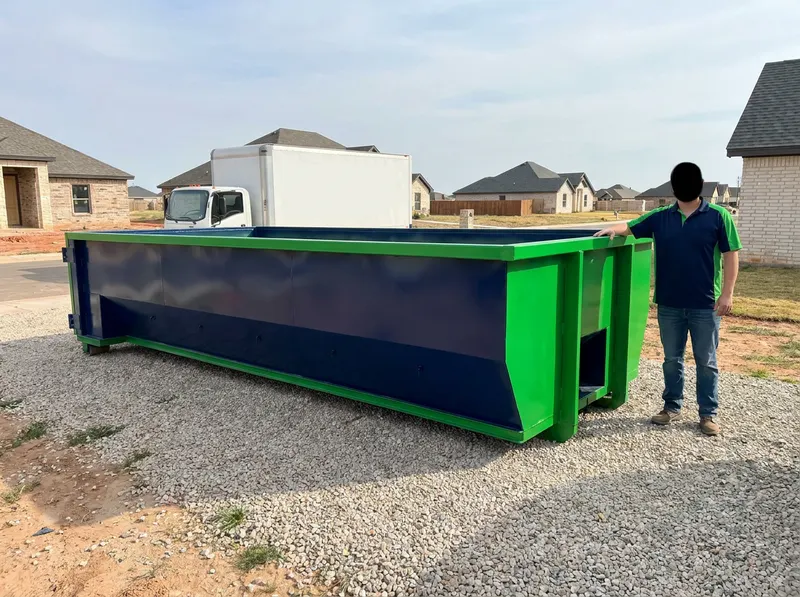
A construction and demolition (C&D) dumpster is a roll-off for heavy, bulky building debris, not household junk removal, where someone else loads for you. With a C&D rental the crew loads the container and Dump & Done Rentals hauls it. The C&D debris stream (concrete, wood, drywall, asphalt shingles, metal) is defined and tracked by the EPA's construction and demolition materials program, which reports C&D makes up more than twice the tonnage of U.S.
municipal trash.
Size the box to the real job, not the biggest number. A single-room remodel in Grassland Estates or Mockingbird Heights fits a 10-yard ($595), it holds roughly 4 pickup loads and sits inside a standard driveway. A full kitchen or bath gut in Woodland Park or Racquet Club typically needs a 15-yard ($650) or 20-yard ($695).
A whole-house renovation or a new build in Saddle Club North, Polo Park, or Nottingham Estates usually calls for a 30-yard ($795). A roof tear-off or a large demolition in Greathouse, Legends Park, or Fairmont Park fits a 40-yard ($895) for high-volume, lower-weight material. The trade-off is simple: a bigger box swallows more volume but eats more driveway; an undersized box means a second haul.
Heavy material changes the call.
Concrete, brick, tile, and dirt are dense, a 40-yard of clean concrete can exceed road-legal axle weight, so for a slab demo or a patio tear-out a 10-yard or 15-yard loaded only partway is the correct choice. Keep the fill level with the top rail; OSHA's 1926 construction standards and state hauling rules both bar overloaded, over-height loads. Separating clean loads helps too, Earth911 and the Construction & Demolition Recycling Association note that source-separated concrete, metal, and clean wood divert more material from the landfill than mixed loads.
Step 1: call (432) 237-1005 or text a photo of the job.
Step 2: the container size is confirmed for the actual debris before anything is scheduled, no over-sizing. Step 3: the roll-off is delivered to the driveway or jobsite, placed on boards where asked to protect the surface. Step 4: the crew loads at its own pace.
Step 5: a pickup date is set and the box is hauled when promised. A dumpster placed on a City of Midland street or right-of-way may require a permit from the City of Midland; on private driveways no permit is needed. For what belongs in the box versus hazardous items, the Texas Commission on Environmental Quality and the EPA household hazardous waste guidance govern paint, solvents, and chemicals, which cannot ride in a C&D load.